Why don’t we make any feature decisions without in-house UX testing?
We follow a clear principle when developing new features: A feature is only good if it proves itself in real-world use. That’s why we don’t just assess technical feasibility or theoretical benefits—we also examine in detail how the solution performs in practice.
Testing is therefore firmly embedded in our workflow. Instead of relying on assumptions, we draw on insights from realistic usage scenarios. This is the only way we can step away from the “developer’s perspective” and adopt a deliberately objective, outside viewpoint. In realistic testing sessions, we identify obstacles early on and optimize the solution to ensure a high level of quality. For us, this is essential to guarantee a seamless customer journey and a consistently intuitive user experience.
How does a typical user experience test work?
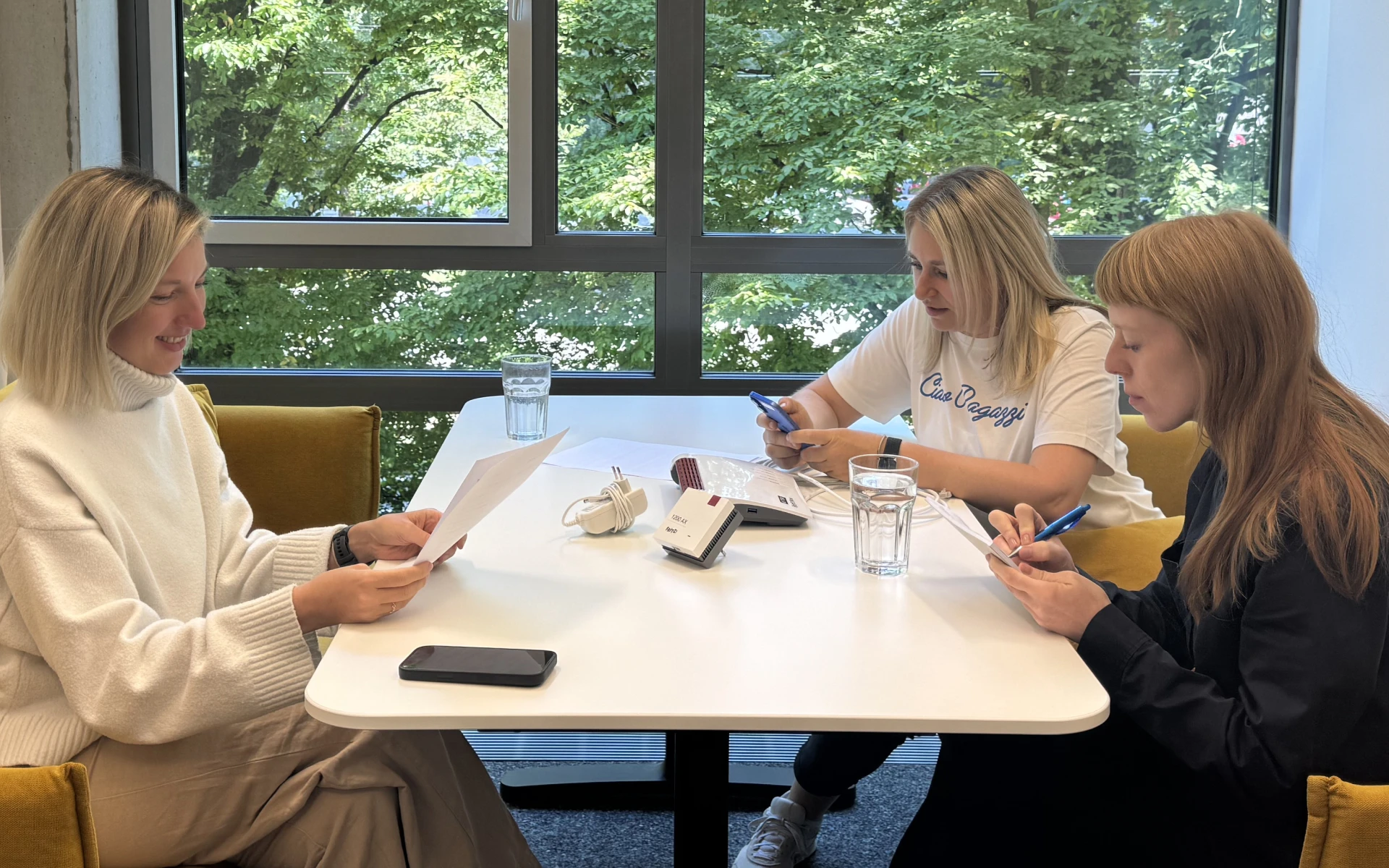
A test begins with the selection of realistic scenarios, such as setting up a router for the first time. We specifically select test participants who have as little prior knowledge of the product as possible and who are not involved in its development. This allows us to make the tests as close as possible to the conditions that future users will face. The design team is responsible for conducting the test, preparing the app, the devices, and the tasks.
The test facilitator observes quietly and without intervening, in order to identify decision-making processes, uncertainties, and comprehension issues. Deliberately allowing for mistakes and failures is a valuable source of data. The test participant comments on their steps by thinking aloud, while we document moments of hesitation, incorrect clicks, or detours within the user interface.
One valuable lesson from earlier tests, for example, was the reaction to loading times: Without a progress indicator, test participants quickly became uncertain and wondered if they had made a mistake. The introduction of a loading progress icon was the direct result of this, designed to restore the necessary confidence in the process for users.
This systematic analysis of comprehension questions and process drop-offs clearly shows us that a good user experience is much more than just a design issue. It’s about actively guiding users every step of the way and leading them safely to their goal through a self-explanatory process.
Read more here: What makes guidance understandable and why self-service only works when it’s based on user logic.
What a service process test reveals about real user logic
From the observations made during these test series, we gain valuable insights that go far beyond purely technical errors. The testing ruthlessly exposes where actual user logic deviates from our planned workflows.
“Every now and then, a test subject shows us that we’ve been thinking far too technically. Based on their everyday experiences, users sometimes navigate to places we wouldn’t have expected at all. That’s exactly what’s valuable to us, because it shows us where we need to provide even clearer guidance.” — Tatjana & Katharina from our design team
Typical stumbling blocks we uncover include technical terms that are misunderstood or steps whose order doesn’t match users’ expectations. An excessive amount of information also often slows down the process: users then tend to just skim the text rather than fully grasping the content.
This visibility of micro-obstacles is particularly valuable to us. These seemingly minor points of friction can later lead to uncertainty and increase the need for support. A key insight from our work is therefore that even minimal adjustments to the workflow often have the greatest positive impact on usability.
Testing thus serves as a necessary reality check, allowing us to compare our internal assumptions with actual needs and individual user behavior, and to derive concrete optimization measures from this analysis.
What Real Insights from Usability Testing Reveal
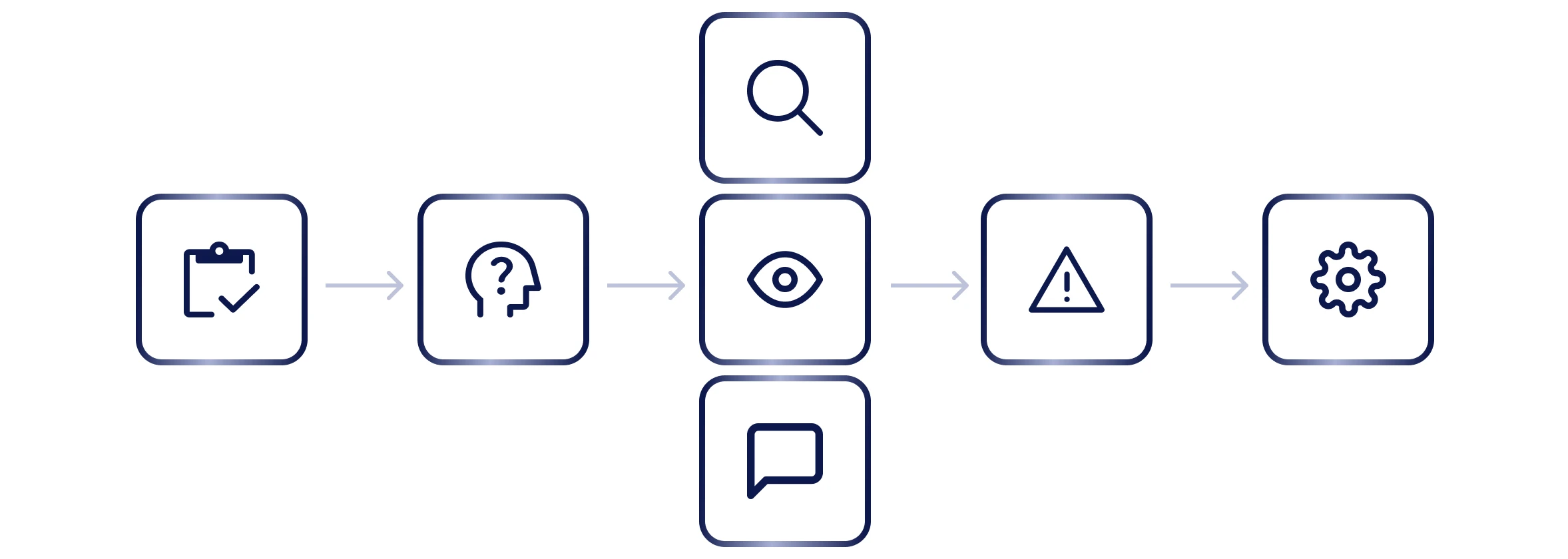
It quickly becomes clear from our design team’s analyses: A usability test doesn’t end once the tasks have been completed. When a test subject encounters an obstacle, that’s when the real work begins for us. We don’t view every identified weakness in our product solutions as a flaw, but rather as valuable input for further development. In follow-up discussions and detailed analyses, we examine exactly what caused the user to stop or feel uncertain.
From this, we draw four key lessons for our service processes:
- Usability over mere aesthetics: Accessibility, clear language, and ease of use are always our top priorities—far ahead of simply “beautiful” aesthetics. A process is good when people can successfully navigate it directly and without needing an explanation.
- Security through guidance: Often, even minimal adjustments—such as a clear status indicator or time estimates—are enough to alleviate anxiety. When users know exactly where they are in the process at all times, they are less likely to abandon it prematurely.
- Seamless integration with IT: We incorporate the insights from the test reports directly into our coordination with the IT team to systematically remove barriers.
- Tangible success for self-service: We’ve found that our testing pays off! A clear example is the initial router setup. The optimized user flow provides clear guidance at every step, making it easier for users to set up the device on their own.
Ultimately, for us, a process is only truly seamless when it guides users safely, without barriers, and directly to their destination. Since both expectations and technologies are constantly evolving, in-house testing remains an ongoing task for us as we strive to continuously improve the user experience.





.webp)