Infrastructure enables availability. Service drives monetization.
Many fiber optic projects achieve high coverage rates – but adoption doesn't happen automatically. The critical factor lies in the structure of the activation and service architecture.
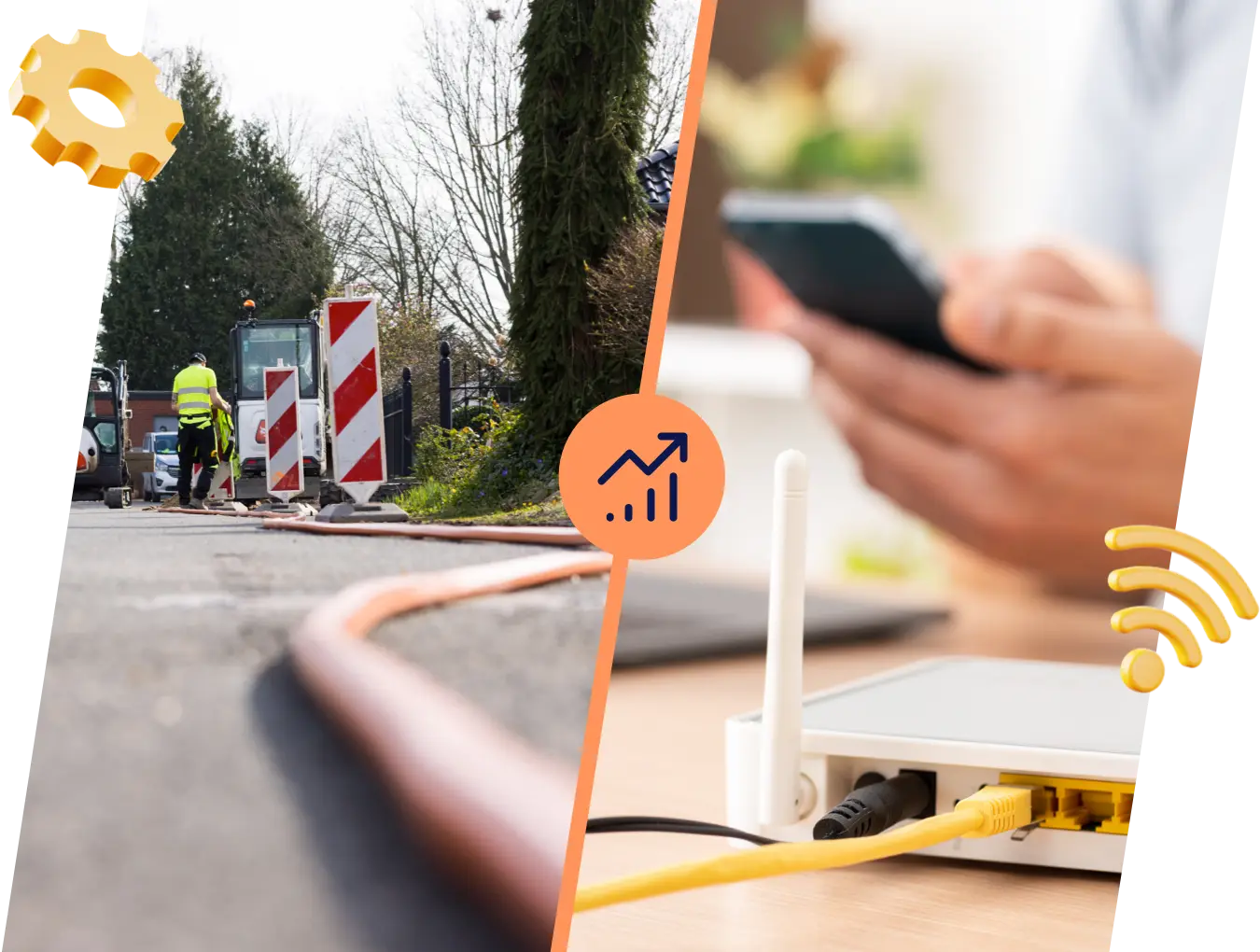
Take-Up is often considered a sales metric. If it falls short of expectations, work is done on marketing campaigns, pricing models, or incentives. However, higher visibility does not generate higher usage if the activation process creates uncertainty, friction, and delay. Take-Up is not an isolated KPI. It is the result of a structured Activation architecture. We are shifting the perspective: away from campaign logic – towards structural monetization of infrastructure.
Misclassified
Marketing
Campaign
Sales
Actual levers
Structure
Activation architecture
Service processes
Platform logic
Take-Up is a structural activation topic – not primarily a marketing topic.
Our approach describes a structured view of the factors that lie between network availability and actual usage. It helps to
to better understand relationships
identify typical activation hurdles
purposefully refine service and activation processes
It's not a product – but a structured view of the market changes we are currently observing.
Take-Up doesn't occur sporadically – but along a structured journey. Each phase influences activation probability, ROI, network utilization, and long-term profitability.
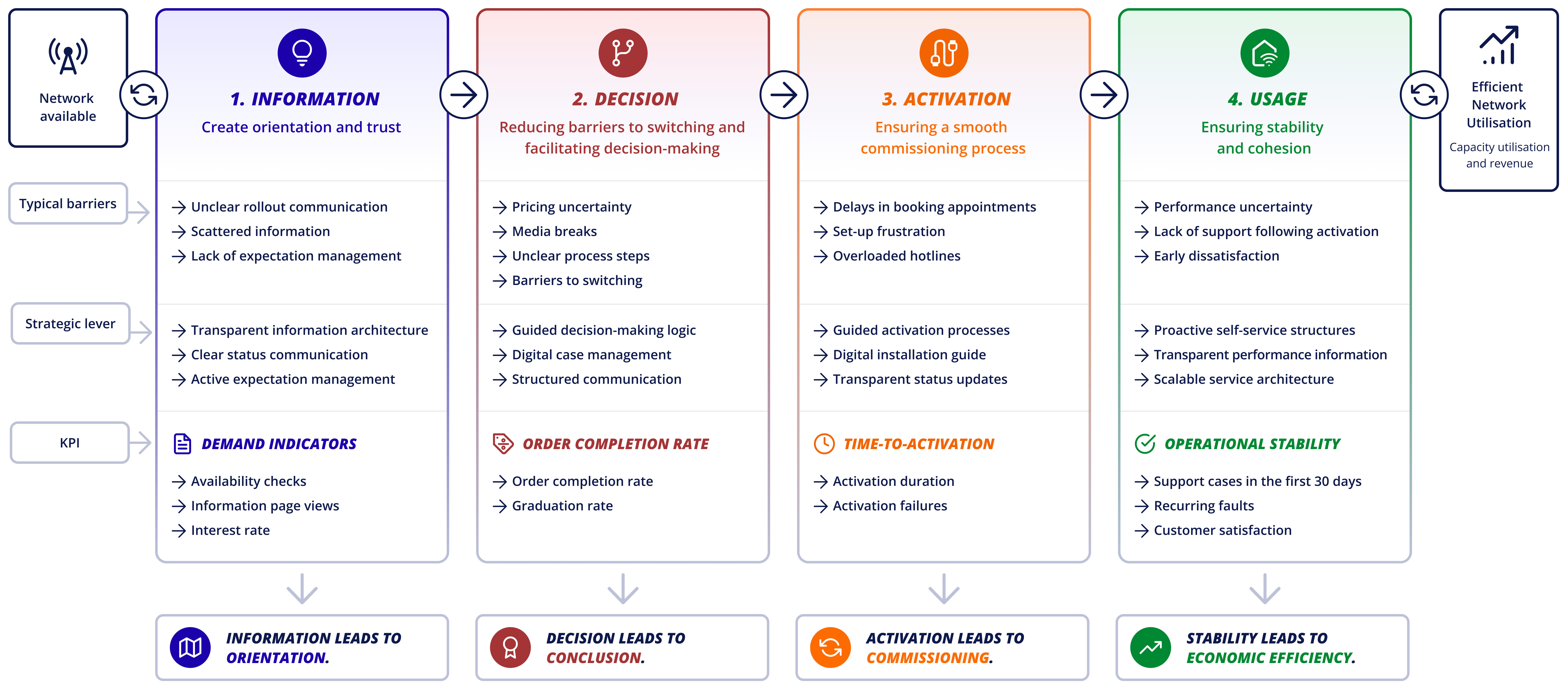
Typical Obstacles
Strategic Lever
Business Impact
Typical Obstacles
Strategic Lever
Business Impact
Typical Obstacles
Strategic Lever
Business Impact
Typical Obstacles
Strategic lever
Business impact
Guiding questions per phase
This framework serves as a structured basis for discussion for management teams to systematically identify activation barriers. A structured self-analysis tool is planned for the future.
An increase in the take-up rate directly impacts:
Network Utilization
Refinancing the Rollout
Margin Structure
Operating Costs
Competitive Position
Take-up is not an operational detail, but a structural business lever for the entire organization.
Operational Implementation
Approaching take-up structurally requires transparency throughout the journey, clear process management, and digital service logic. MyProvider translates this logic into concrete service processes: from clear information and guided activation to scalable self-service post-usage. This transforms take-up from a mere KPI into a manageable process spanning the entire customer journey.
To the MyProvider Solution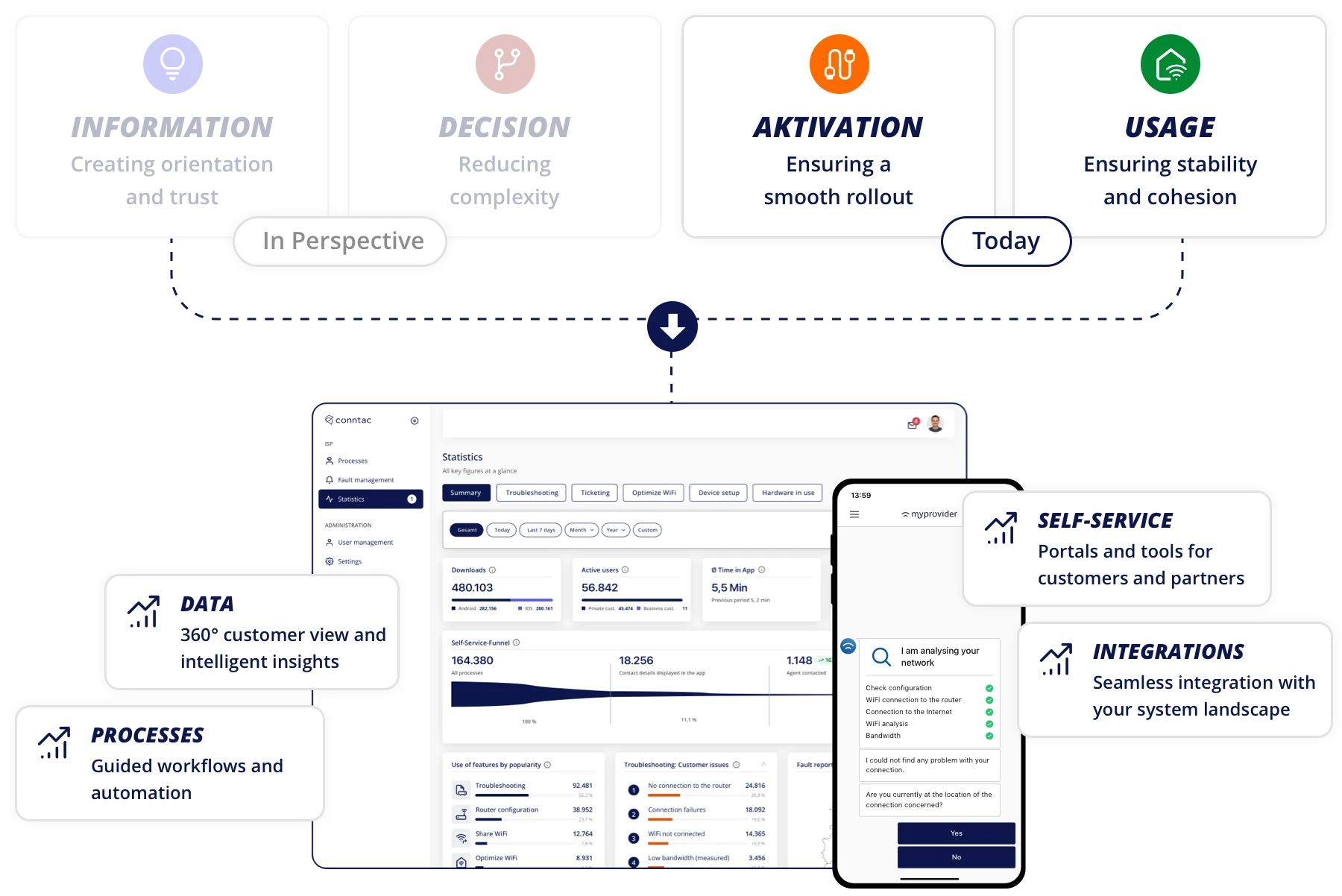

Latest articles on fibre-optic activation, usage and customer self-service.
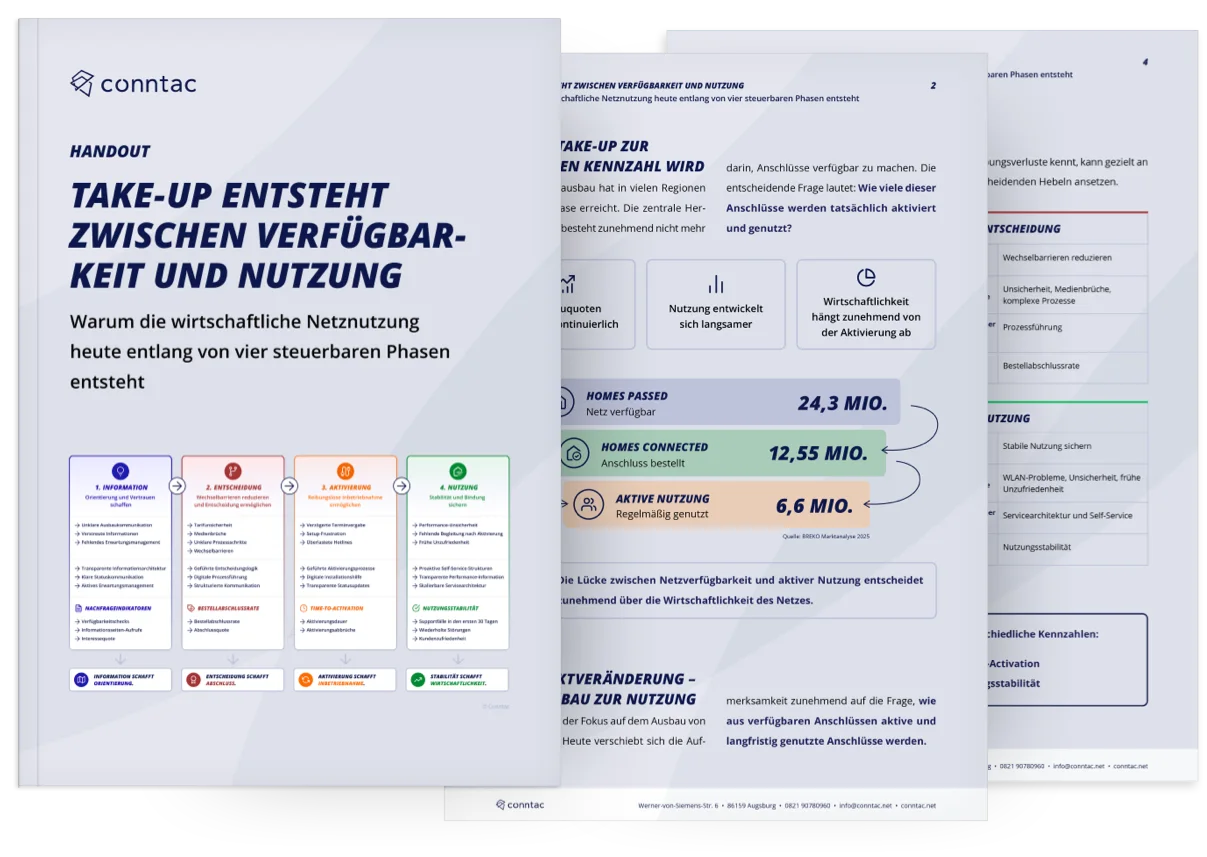
A concise summary of the four controllable phases, from information to use.
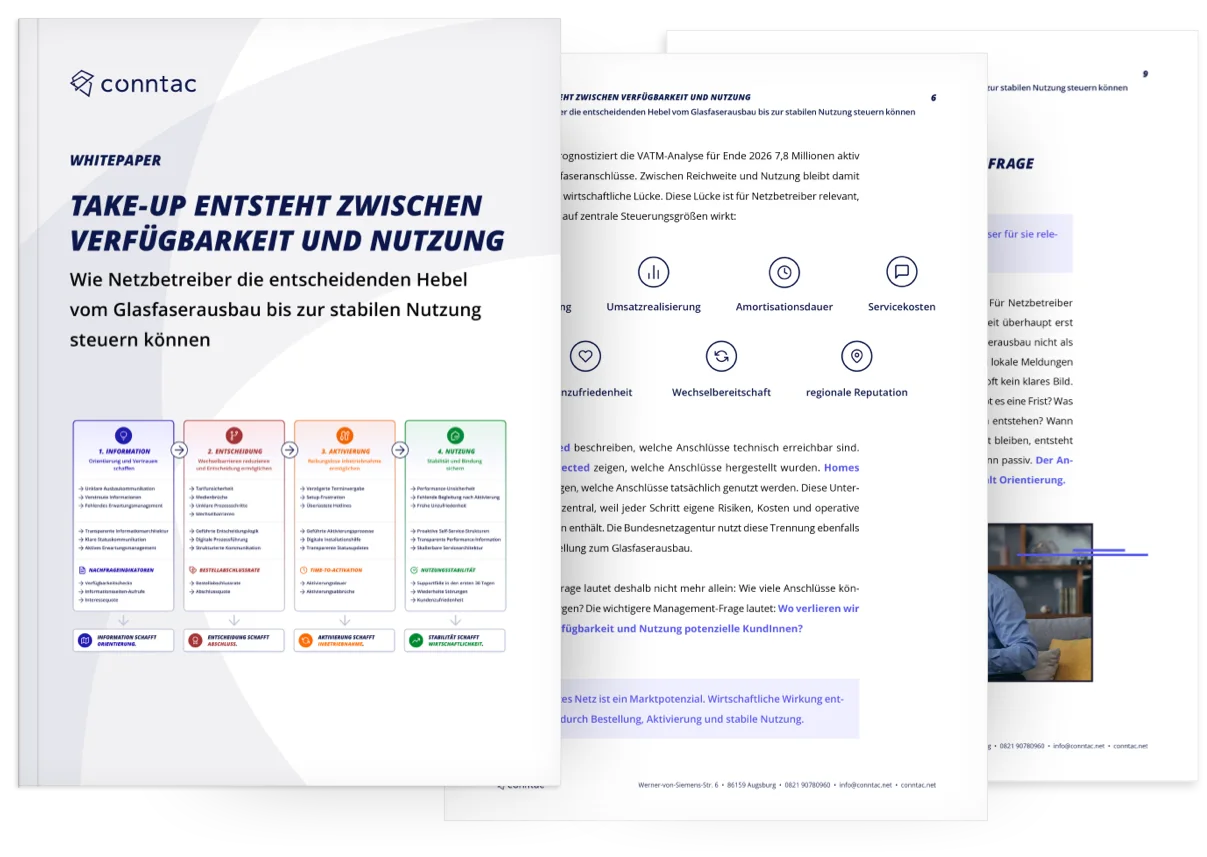
Friction losses, KPIs and operational levers, from fibre-optic roll-out to stable usage.
Those who think strategically about fiber optics must not only build networks but also systematically enable activation. Take-up is not a sales problem; it's an organizational issue. This perspective combines market understanding with operational feasibility, making take-up a controllable success factor.